Views: 0 Author: Site Editor Publish Time: 2025-07-31 Origin: Site


Reformer pilates lets you try pilates in a new way. You use a special machine that helps you move safely. This kind of pilates supports your whole body, not just your core. You can start reformer pilates at any fitness level. Many people feel stronger and more flexible with pilates. You might see better posture and balance. Reformer pilates helps both your body and your mind. Try pilates to see if it works for your life.
Reformer Pilates uses a special machine to help your whole body. It is safe and works well for everyone, no matter your fitness level.
This kind of Pilates gives you more choices and resistance than mat Pilates. It helps you get stronger, more flexible, and stand up straighter, and you see results faster.
Classes usually start with a warm-up, then main exercises, and end with a cool-down. You can join a group class or take private lessons to fit what you need.
The reformer machine helps your joints and lets you change the resistance. This makes Pilates safe and easy for beginners and people with injuries.
You should start with a certified instructor and move slowly and with control. This helps you learn safely and get good results for your body and mind.
You may wonder how reformer pilates is different. In reformer pilates, you use a special machine called a reformer. This machine has a moving platform, springs, straps, and a footbar. You can lie down, sit, kneel, or stand on it. The springs make your muscles work harder.
Reformer pilates works your whole body. You do moves for your arms, legs, back, and core. The machine helps you move with control. You pay attention to your breathing and body position. This keeps your workout safe and helpful.
Many people like reformer pilates because it is easy on your joints. The slow moves help you avoid getting hurt. You can change the resistance to fit your needs. Anyone can use the reformer, even if you are new to pilates.
Tip: The reformer lets you try new ways to work your muscles. You can make the resistance harder as you get stronger. This keeps your workouts fun and different.
Studies show reformer pilates burns more calories than mat pilates. You may burn about 2.6 calories each minute with reformer pilates. With mat pilates, you burn about 1.9 calories per minute. The machine helps you build muscle and get stronger faster. Over time, you may see better balance, flexibility, and posture.
Maybe you have tried mat pilates before. Mat pilates uses your body weight and a mat. You do moves like the hundred, roll-ups, and leg circles. These help you build core strength and flexibility.
Reformer pilates uses a machine, so it feels different. Here are some main differences:
The reformer uses springs and pulleys for resistance.
You can push, pull, and stretch in more ways.
The reformer helps you work certain muscles better.
You can exercise in many positions, not just lying down.
The machine supports your body, so some moves are easier.
Aspect | Reformer Pilates | Mat Pilates |
|---|---|---|
Equipment | Uses a reformer machine with springs, straps, and a sliding carriage | Uses only a mat and body weight |
Muscle Engagement | Targets deeper muscles, offers more resistance, and allows for faster strength gains | Focuses on core stability, posture, and controlled movements |
Exercise Variety | Offers a wide range of dynamic, multi-directional movements | Exercises are slower-paced and emphasize balance and concentration |
Accessibility | Requires equipment and often instructor guidance | Accessible, affordable, and can be done anywhere |
Progression Potential | Allows for customized resistance and advanced training | Limited resistance customization |
Both types of pilates use the same main ideas. You focus on control, breathing, and body position. Mat pilates is good for beginners and people who want a simple workout. Reformer pilates is great if you want more variety or a bigger challenge.
You can pick the style that fits your goals. Some people start with mat pilates to learn the basics. Then they try reformer pilates for harder training. Both types help you get stronger, more flexible, and healthier.
When you walk into a pilates studio, you will see the reformer machine. This machine does not look like other gym equipment. It has a strong frame and a moving platform. There are many parts you can change to fit your needs. All the parts work together to help you exercise well.
Here is a quick look at the main parts:
Component | Description |
|---|---|
Frame | Made from wood or metal to keep it steady and safe. |
Carriage | Soft platform that moves back and forth as you exercise. |
Springs | Different colored springs let you pick how hard it is. |
Footbar | Bar you can move to push or pull during your workout. |
Straps and Ropes | You use these with your hands or feet for more moves. |
Shoulder Rests | Soft pads that hold your shoulders and head in place. |
Accessories | Things like jumpboards and boxes give you more ways to exercise. |
You can change the springs and footbar to fit your size and skill. The reformer lets you do exercises lying down, sitting, or standing up. This makes pilates work your whole body. You can pick how hard each move is by changing the resistance. Many home reformers fold up so you can store them easily.
You should learn how to use the reformer before you start. First, check that all the parts are tight and safe. Wear clothes that fit and socks that grip so you do not slip. Keep the space around the reformer clear. Begin with easy moves and watch your form. If something hurts, stop right away.
The reformer gives you a workout that is gentle on your joints. You can get stronger and more flexible without hurting yourself. Physical therapists use the reformer to help people heal from injuries. You can make the exercises easier or harder by changing the resistance. This makes pilates good for beginners, older people, and those with injuries.
Pilates reformer moves can be changed for many needs. Instructors can set up the machine for people who need extra help. Many people with injuries or disabilities use pilates to get stronger and have better balance. Always work with a trained instructor if you are new or need special help. The reformer helps you do pilates safely at any fitness level.
When you join reformer pilates classes, you will notice a clear structure. Most classes start with a short warm-up. You might do light footwork or gentle leg circles to get your muscles ready. The instructor will guide you through each step.
A typical class follows this order:
Warm-up (3–5 minutes): You begin with easy moves to wake up your body and increase blood flow.
Main Exercises (10–12 minutes): You focus on core strength and big muscle groups. Moves like the Hundred, Leg Circles, and Short Box Series help you build strength and control. The instructor keeps you moving smoothly from one exercise to the next.
Cool-down (3–5 minutes): You finish with stretches such as the Mermaid or Elephant. These help your body relax and recover.
You can choose between group and private pilates classes. Group classes let you work out with others. You get support from your classmates and learn together. Private sessions give you one-on-one time with the instructor. This is great if you want special attention or have health needs. Both types of classes help you improve your skills and reach your goals.
Tip: Group reformer pilates classes create a friendly community. You can meet new people and stay motivated. Private sessions help you focus on your own progress and get faster results.
Pilates studios offer different levels of reformer pilates classes. You can find a class that matches your experience. Here is a table to help you understand the levels:
Class Level | Description |
|---|---|
Beginner | Learn the basics and get comfortable with the reformer machine. |
Intermediate | Try more challenging moves and build on your skills. |
Advanced | Practice complex routines with higher intensity. |
Most pilates classes last about 50 to 60 minutes. Group classes usually run for 55 to 60 minutes. Private sessions often last around 50 minutes. Each session includes time for warm-up, main exercises, and cool-down. This timing gives you a full workout without feeling rushed.
You can see the typical class structure below:
5–10 minutes: Warm-up and breathwork
30–40 minutes: Core and full-body movement
10–15 minutes: Stretching and cool-down
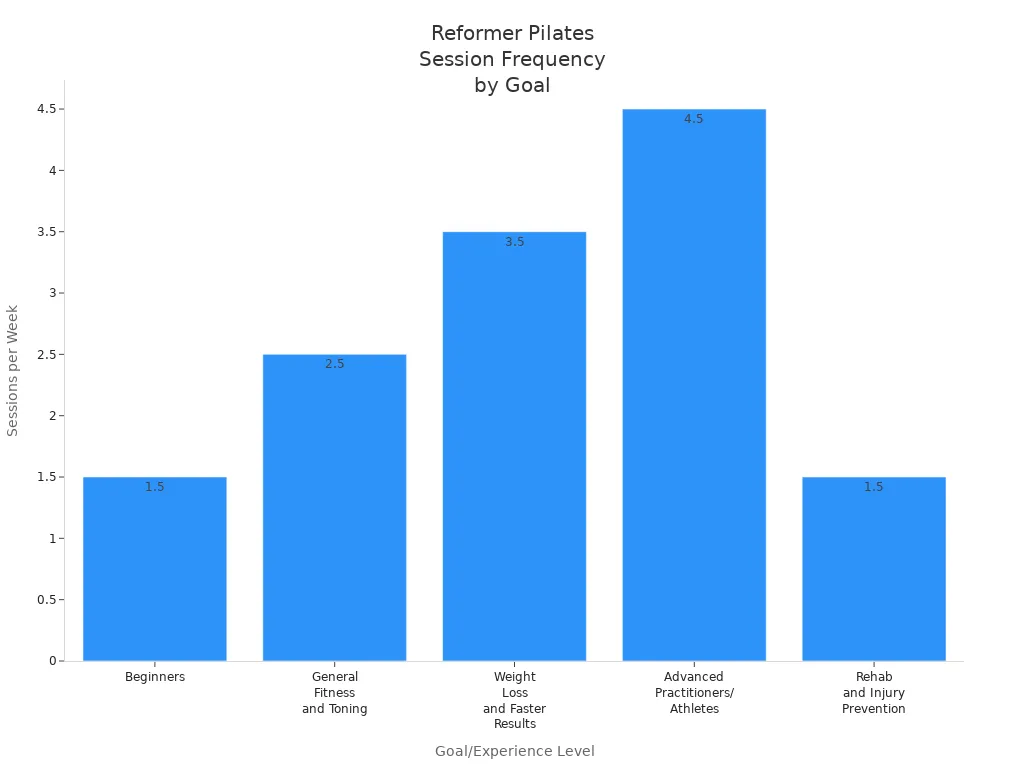
You should pick a class that fits your level and goals. Beginners often start with one or two sessions per week. As you get stronger, you can add more classes. Consistency helps you see results in strength, flexibility, and balance. Reformer pilates classes welcome everyone, no matter your age or fitness level.
There are many pilates reformer exercises you can do. These moves help you get stronger and more flexible. They also help you balance better. The exercises work your core, arms, legs, and back. Here are some popular pilates moves you can try on the reformer:
The Hundred: You lie on your back and lift your legs. You pump your arms up and down. This move makes your core stronger and helps with stability.
Plank to Pike: You start in a plank position. Then you lift your hips high. This works your abs, shoulders, and back muscles.
Kneeling Abdominals: You kneel on the carriage and pull the straps. This move trains your abdominals and helps you balance.
Short Box Round Back: You sit on the box and round your back. This exercise makes your deep core muscles stronger. It also helps your spine move better.
Teaser: You balance on the carriage and lift your arms and legs. This move works your whole body and builds control.
Side Plank with Leg Lift: You hold a side plank and lift your top leg. This exercise works your obliques and outer thighs.
Mermaid Twist: You sit sideways and twist your body. This move stretches your spine and makes your core stronger.
Other pilates reformer exercises help you in different ways. Footwork, Chest Expansion, and Single-Leg Stretch make your legs stronger. They help you stand up straighter and move better. You can change the springs on the reformer to make moves easier or harder. Beginners start with simple moves and light resistance. People who are advanced try harder moves for a bigger challenge.
Pilates reformer exercises are good for your body and mind. You will stand up straighter and feel stronger. You will also become more flexible. Studies show pilates helps you balance and move better. Older adults who do pilates have better posture and fall less often. You will feel less tightness in your muscles and have more energy.
The reformer is gentle on your joints. This makes pilates safe for everyone. Doing pilates often helps you move with control. It also lowers your chance of getting hurt. You may feel less stress and worry. Research shows pilates can help with depression and sleep. Group classes help you make friends and feel happier. When you do pilates reformer exercises, you help your body and your mind.
It is important to pick the right pilates class. The teacher you choose can help you learn better. Look for classes with certified pilates instructors. Good teachers have training from programs like the National Pilates Certification Program or NETA. These programs teach both mat and reformer pilates. This means your teacher knows basic and advanced moves.
Think about your schedule before picking a class. Some studios have group classes, private lessons, or online options. Group classes are fun and help you meet people. Private lessons give you more help from the teacher. You can read reviews or ask friends for advice. Check the studio’s website to learn about the teacher’s experience and style.
Here are some things to think about when choosing a pilates class or teacher:
The teacher’s training and certificates
The type of class (in-person, online, or both)
What other students say about the class
The price and if it fits your budget
What you will learn in the class
Where the class is and how easy it is to get there
Tip: A good teacher will help you set up the reformer and show you how to do each move safely.
Starting pilates can be fun but also a bit scary. You can make your first classes easier by following some simple tips:
Warm up before you start. Do gentle stretches and light footwork to get ready.
Focus on your core. Pull your belly in and keep your back straight.
Change the reformer settings so they fit your body. Begin with light resistance and add more as you get stronger.
Move slowly and carefully. Fast moves can cause mistakes or injuries.
Breathe deeply and evenly. Breathe in through your nose and out through your mouth.
Pay attention to your body. If something hurts, stop and ask your teacher for help.
Keep track of your progress. Write in a journal or take pictures to see how you improve.
Many new students worry about making mistakes. Some common mistakes are moving too fast, holding your breath, or not using your core. You can avoid these by using good form and asking your teacher for help.
Note: Try to go to pilates classes often. This will help you get stronger, more flexible, and more confident.
You get lots of good things from reformer pilates. This workout is easy on your joints. Anyone can try it, no matter their fitness level. Many people feel stronger and have better balance after doing it often. You can do moves in many ways, so every class feels different. People say they hurt less, sleep better, and have more energy.
Long-Term Benefit | What You Gain |
|---|---|
Stronger Core | Better posture and less pain |
Improved Flexibility | Easier movement every day |
Enhanced Mood | Less stress and more focus |
Try a pilates class to see how it helps you. This could be your first step to feeling stronger and happier!
Wear clothes that fit close to your body. Make sure you can move easily in them. Pick socks with grips so you do not slip. Do not wear loose clothes because they might get stuck in the machine.
Yes, you can do it. Always tell your teacher about your injury first. The reformer helps support your body and lets you change how hard it is. Many people use Pilates to help heal after getting hurt.
Try to go to class two or three times each week. You will get stronger and more flexible after a few weeks. Doing Pilates often helps you see the best changes.
You do not need any experience to start. Teachers will show you how to do each move. Beginners start with easy moves and light resistance. You will learn the right way and feel more sure of yourself as you go.
Reformer Pilates helps you burn calories and build muscle. You might lose weight if you also eat healthy foods. You will also stand up straighter and feel more energy.