Views: 0 Author: Site Editor Publish Time: 2026-04-09 Origin: Site


Thinking about buying a Pilates Reformer for home use? It can feel confusing at first. Many options exist, but not all fit your space or goals. In this article, you will learn how to choose the right Pilates Reformer for your home and training needs.
A Pilates Reformer is a specialized fitness machine designed to support controlled, resistance-based movement.It uses a sliding carriage, spring system, and adjustable components to guide the body through precise exercises.Instead of relying on weights, it uses spring tension, which creates smooth and consistent resistance during every motion.
The core structure of a Pilates Reformer includes several key parts that work together:
Carriage: A sliding platform where the user lies, kneels, or sits. It moves back and forth along rails, creating dynamic motion during exercises.
Springs: These provide adjustable resistance. Different spring levels allow users to increase or decrease intensity depending on strength and skill level.
Frame: Usually made of wood or metal, it supports the entire system and ensures stability during workouts.
Foot Bar: A stable bar used for pushing movements, helping to engage legs and core muscles.
Straps and Pulleys: These allow upper-body exercises and improve coordination, flexibility, and control.
Unlike traditional gym equipment, a Pilates Reformer focuses on controlled movement and alignment rather than heavy lifting.It encourages slow, precise motion, which helps build strength while improving posture and balance.
This makes it especially appealing for users who want a more mindful and low-impact workout experience.
Using a Pilates Reformer at home offers a unique combination of convenience and effectiveness.It allows users to train consistently without traveling to a gym, which helps build long-term habits.At the same time, it provides a full-body workout that improves both strength and flexibility.
Here are the main advantages of having one at home:
Full-body engagement: It works arms, legs, core, and back in one session. This makes workouts efficient and balanced.
Low-impact training: It reduces stress on joints while still delivering effective resistance. This is ideal for long-term use.
Time efficiency: No commute, no waiting for equipment. You can train anytime that fits your schedule.
Progressive difficulty: Adjustable springs and components allow gradual improvement over time.
A home Pilates Reformer is not limited to one type of user.It can support a wide range of fitness levels and personal goals.Understanding who benefits most can help you decide if it fits your lifestyle.
Beginners and first-time users often find it easier to start with a reformer than with free weights.The guided movement helps maintain proper form, which reduces the chance of injury.It also builds confidence, since exercises feel more controlled and structured.
Rehabilitation and recovery users can also benefit from it.Because the machine provides smooth resistance and low-impact movement, it is suitable for gentle strengthening.Many people use it to rebuild mobility and stability after injury or during physical therapy routines.
Fitness enthusiasts and home gym users may see it as a long-term investment.It offers more variety than basic equipment, allowing users to expand their routines without adding multiple machines.
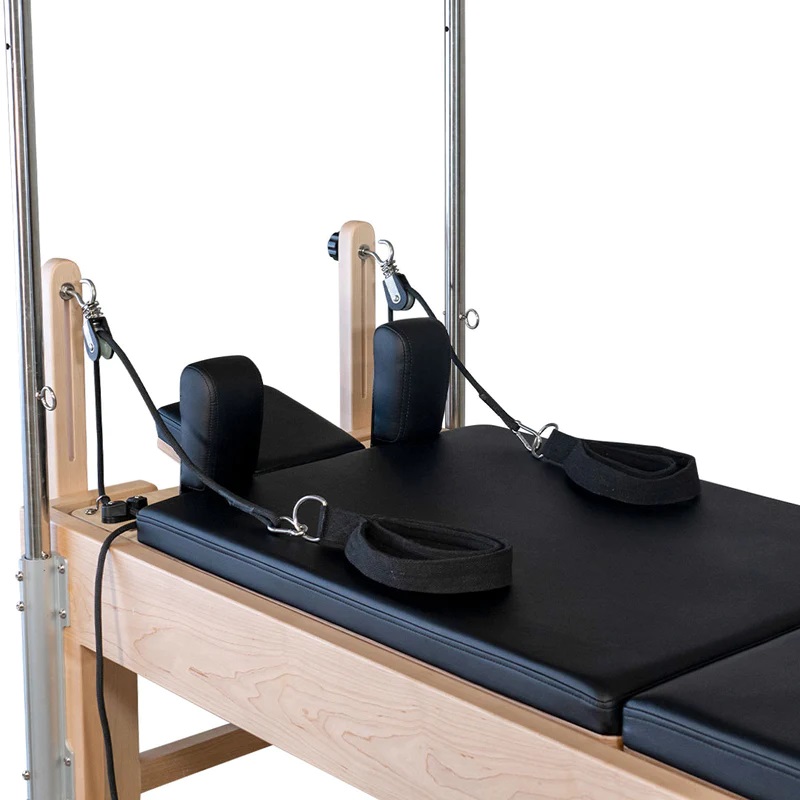
When choosing a Pilates Reformer for home use, space planning is often the first real challenge. Many people focus only on the machine size, but they forget about movement space. A reformer needs room not only for placement but also for safe and comfortable exercise. You need space to extend your arms, adjust straps, and move around the machine without restriction, otherwise the workout experience feels limited.
To make a better decision, you should think about several dimensions at the same time:
Machine footprint: Most reformers are around 220–240 cm long, which already takes up significant floor space.
Side clearance: At least 60–100 cm on each side helps you move safely and adjust components easily.
Front and rear space: You need extra room for stretching, especially when using the foot bar or jump board.
Room layout: Consider doors, walls, and furniture placement, since they affect usability more than raw size.
| Space Requirement | Suggested Range | Practical Impact |
|---|---|---|
| Machine Length | 220–240 cm | Ensures full range of motion |
| Side Clearance | 60–100 cm each side | Allows safe access and adjustments |
| Front/Back Space | 50–80 cm | Supports stretching and setup flexibility |
Instead of guessing, it helps to mark the space on your floor before buying. This simple step shows how the Pilates Reformer will fit into your daily environment, and it prevents costly mistakes later.
A key decision for home users is whether to choose a foldable or non-foldable Pilates Reformer. The right choice depends on your lifestyle, not just your room size. If your space serves multiple purposes, such as a living room or shared bedroom, flexibility becomes very important.
Foldable reformers are designed to solve space limitations. They can be stored vertically or moved aside after use, which makes them ideal for modern homes where space is limited. They also tend to be lighter and easier to handle, so you can reposition them without much effort.
Foldable reformers:
Save space after workouts
Work well in apartments or shared rooms
Easier to transport or relocate
Suitable for flexible routines
Non-foldable reformers:
Provide stronger stability during use
Often have a more solid structure
Better for daily, intensive training
Ideal for dedicated home gym setups
The frame is one of the most important parts of a Pilates Reformer, and it directly affects stability, durability, and comfort. When you use the machine regularly, you begin to notice small differences in how it feels. A well-built reformer moves smoothly, stays stable, and supports your body without unnecessary noise or vibration.
Most reformers use either wood, metal, or a combination of both materials. Each option has its own strengths, and the choice often depends on personal preference and usage frequency.
Wood frames (such as beechwood):
Offer a more natural and premium appearance
Provide stable and comfortable support
Fit well into home environments visually
Metal or aluminum structures:
Deliver higher durability over time
Strengthen the overall frame
Improve resistance to wear and tear
| Material Type | Core Benefit | Best Fit Scenario |
|---|---|---|
| Wood | Aesthetic and stable feel | Home users focused on comfort |
| Metal | Strong and durable structure | Frequent or heavy use |
| Hybrid | Balanced performance | Most home and studio users |
Build quality also depends on smaller details. Smooth guide rails, high-grade rollers, and secure joints all contribute to performance. For example, some Nanjian reformers use reinforced aluminum rails and precision rollers to create quieter and smoother motion, which improves the overall home workout experience.
A Pilates Reformer becomes truly useful when it offers flexibility in resistance and adjustment. Without these features, the machine may feel too easy or too difficult over time. That is why the resistance system plays a central role in both short-term comfort and long-term progress.
Most reformers use a spring-based system. These springs provide different resistance levels, allowing users to control intensity based on their strength and training goals. As your body improves, you can increase resistance gradually, which supports continuous development.
Key features to pay attention to include:
Spring resistance system:
Multiple levels from light to heavy
Easy switching between settings
Smooth and consistent tension
Adjustable components:
Foot bar positions for different exercises
Strap length adjustments for better reach
Pulley systems to improve alignment and control
A compact or mini Pilates Reformer is often the first choice for people living in apartments or smaller homes. These models are designed to reduce footprint while still offering essential training functions. They are lighter in weight, easier to move, and more flexible in placement, which makes them ideal for users who do not have a dedicated workout room.
Instead of taking over the entire space, they fit into daily life more naturally. You can place them in a bedroom, living room, or even store them when not in use. Many home users prefer this type because it lowers the barrier to starting regular workouts.
Key advantages:
Fits small spaces without feeling crowded
Easy to move or reposition
Suitable for beginners or casual training
Lower entry cost compared to larger models
Limitations to consider:
Shorter carriage may reduce range of motion
Fewer advanced features or attachments
Less stability during high-intensity exercises
Some Nanjian compact models, such as mini home-use reformers, focus on balancing size and performance. They include adjustable resistance and foldable structures, which makes them practical for everyday home fitness.
A foldable Pilates Reformer is built for flexibility in modern living environments. It allows users to train effectively without dedicating permanent space to fitness equipment. After a workout, it can be folded and stored, which makes it ideal for rooms that serve multiple purposes.
This type is especially useful for people who want a full reformer experience but still need space for daily activities. It supports a balance between functionality and convenience, which is often a top priority for home users.
Why people choose foldable reformers:
Easy to store after use
Keeps living areas clean and open
Suitable for shared or multi-purpose rooms
Often includes transport-friendly design
Things to keep in mind:
Folding mechanism should be stable and easy to use
Slightly less rigid than fixed models in some cases
Setup time may be needed before each session
A standard home Pilates Reformer is the most balanced option for users who want consistent training. It is larger than compact or foldable models, but it offers better stability and smoother movement. For people who train regularly, this type often provides a more comfortable and reliable experience.
Unlike smaller models, it supports a full range of motion and feels more solid during exercises. This makes it suitable for both beginners and intermediate users who plan to use it long-term.
Main strengths:
Strong and stable frame
Smooth carriage movement
Better support for daily workouts
Suitable for long-term investment
Considerations:
Requires dedicated space
Harder to move once installed
Higher initial cost in some cases
A multi-functional Pilates Reformer expands beyond basic training. It includes additional features such as jump boards, towers, or extended resistance systems. These features allow users to perform a wider range of exercises, which increases training variety and intensity.
This type is often chosen by advanced users or those who want a more complete workout system at home. It supports strength training, flexibility work, and more complex movement patterns in one machine.
Key features:
Additional attachments like towers or boards
More resistance options
Expanded exercise library
Greater training flexibility
When it makes sense to choose:
You have enough space for a larger setup
You want advanced or professional-level training
You plan to use it frequently over time
When space is limited, choosing the right Pilates Reformer becomes a practical decision rather than a purely performance-based one. You need something that fits into your daily environment without creating inconvenience. In smaller homes, flexibility matters more than size alone, so compact or foldable models become the preferred option.
A well-designed space-saving reformer should not feel restrictive during workouts. It should still allow smooth movement, stable support, and enough resistance for effective training. Many users look for models that can be stored vertically or moved aside after use, which helps keep the room functional for other activities.
What to prioritize in small spaces:
Compact footprint reduces room pressure and improves usability
Foldable structure allows easy storage after workouts
Lightweight design makes repositioning simple
Quiet operation avoids disturbing others in shared environments
Additional practical considerations:
Check floor type to ensure stability during use
Consider noise levels if you live in apartments
Look for simple setup mechanisms to save time
| Feature Priority | Why It Matters | Ideal Outcome |
|---|---|---|
| Compact Size | Fits limited space | Comfortable movement |
| Foldable Design | Easy storage | Flexible room usage |
| Quiet Operation | Reduces noise | Suitable for shared homes |
Some Nanjian compact and foldable reformers are designed exactly for this scenario. They combine space-saving structure and smooth movement, which helps users maintain a consistent routine without sacrificing living space.
For beginners, a Pilates Reformer should feel easy to understand and comfortable to use. Complicated setups or advanced features can create confusion at the start, so simplicity becomes more important than maximum functionality. A beginner-friendly reformer supports gradual learning and builds confidence during early workouts.
The focus should be on ease of use and safety. Adjustable components should be simple to operate, and resistance levels should allow smooth progression without overwhelming the user. A stable frame also helps beginners feel secure during movement.
Key features beginners should look for:
Simple setup and intuitive design
Moderate resistance levels for controlled training
Smooth carriage movement for better coordination
Clear adjustment system for foot bar and straps
Why these features matter:
They reduce learning difficulty and improve consistency
They support correct posture and movement patterns
They lower the risk of strain or injury
For experienced users, a Pilates Reformer needs to deliver more than basic functionality. It should support higher resistance, more complex exercises, and long-term durability. Advanced training often involves stronger movements and a wider range of exercises, so the machine must handle increased demands without losing stability.
In this case, performance becomes the main focus. Users look for a reformer that can grow with their training level and support advanced routines over time. Additional features and attachments also become more valuable.
Important factors for advanced users:
Higher resistance levels for strength progression
Strong and durable frame for stability
Smooth and consistent carriage movement
Compatibility with additional accessories
Advanced training benefits:
More variety in exercises
Better muscle engagement and control
Long-term performance without frequent upgrades
When selecting a Pilates Reformer, price is always part of the decision, but value matters more than cost alone. A lower price may seem attractive at first, but it may not deliver the durability or performance needed for long-term use. On the other hand, a higher-priced model should justify its cost through better materials, smoother operation, and greater versatility.
Instead of focusing only on price, it helps to evaluate what you are getting in return. Think about how often you will use the reformer, how long you expect it to last, and whether it supports your future fitness goals.
How to balance budget and value:
Entry-level models suit occasional or beginner use
Mid-range models offer better balance of price and features
Premium models focus on durability and advanced functionality
Long-term use often makes higher quality more cost-effective
Key value indicators:
Build quality and material durability
Smooth and quiet performance
Adjustable features and flexibility
Brand reliability and product design
Choosing the right Pilates Reformer depends on space, skill level, and long-term goals. Nanjian offers compact, foldable, and durable models that deliver smooth motion, adjustable resistance, and practical home use value.
A: A Pilates Reformer supports full-body training, improving strength, flexibility, and balance at home.
A: Choose a Pilates Reformer that is foldable or compact for easier storage and flexible room use.
A: Yes, a Pilates Reformer offers adjustable resistance and controlled movement for safe beginner training.
A: A Pilates Reformer price varies by features, size, and build quality, from basic to premium levels.
A: A Pilates Reformer should include adjustable springs, stable frame, and smooth carriage for effective workouts.