Views: 0 Author: Site Editor Publish Time: 2026-04-14 Origin: Site


Wood or aluminum Pilates Reformer, which should you choose? Many buyers feel unsure when comparing them. This article explores the key differences between each Pilates Reformer type. You will learn how to choose the right Pilates Reformer based on space, usage, and training goals.
A Pilates Reformer is a versatile fitness machine designed to deliver controlled resistance training through a guided movement system. Instead of relying on traditional weights, it uses a sliding carriage and adjustable springs to create resistance, allowing users to perform exercises that improve strength, flexibility, and balance at the same time. Because the movement follows a fixed path, it helps users maintain proper form while reducing unnecessary strain on joints.
The way it works is relatively simple but highly effective. As the user pushes or pulls against the springs, the carriage moves smoothly along the rails, creating resistance that adapts to different levels of intensity. This makes it suitable for a wide range of users, from beginners to advanced athletes. In practical use, the overall performance depends on how well each component interacts with the others, which is why build quality and material selection become important factors.
When selecting a Pilates Reformer, material plays a critical role in shaping the overall user experience. It affects not only how the equipment looks, but also how it performs during workouts and how it holds up over time. The choice between wood and aluminum reflects different priorities, such as stability, portability, and maintenance requirements.
A wood Pilates Reformer typically offers a more solid and grounded feel, which can enhance control during slow and precise movements. This makes it appealing for users who value a stable training experience and a more premium visual appearance. In contrast, an aluminum Pilates Reformer is generally lighter and easier to handle, making it more suitable for spaces where equipment needs to be moved or adjusted frequently.
How Material Influences Performance:
Stability and Workout Feel: Heavier materials tend to provide a more stable base, which helps users feel more secure during controlled movements and improves overall exercise precision.
Portability and Flexibility: Lightweight structures are easier to reposition, making them ideal for studios or home setups where space needs to be optimized regularly.
Maintenance and Durability: Some materials require more care to maintain their condition, while others offer better resistance to wear, moisture, and daily usage.
Noise and Smoothness: Material density can influence vibration and sound levels, which affects how quiet and comfortable the workout experience feels.
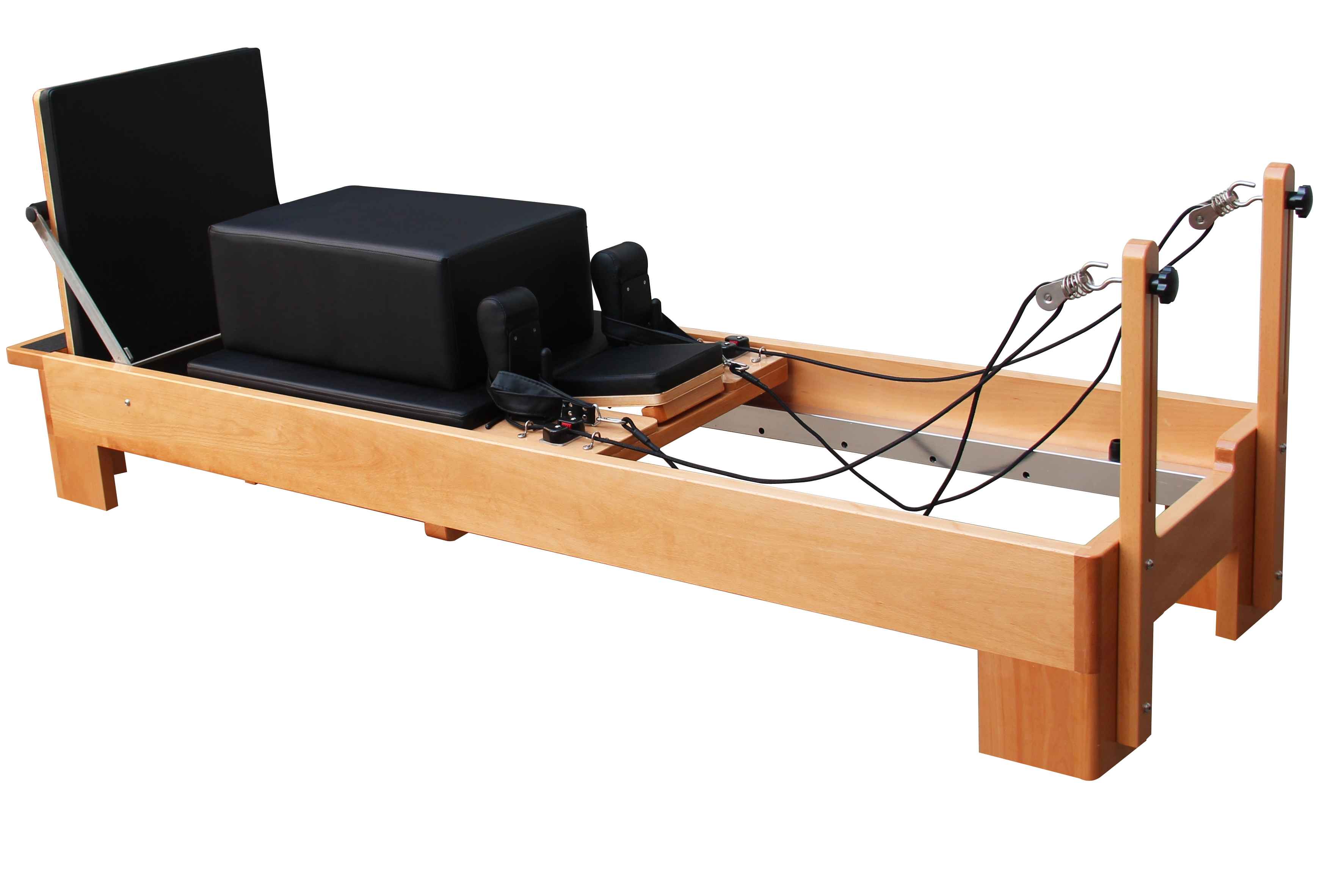
A wood Pilates Reformer is often chosen for its natural appearance and stable workout feel. It creates a warmer and more premium training environment, which is especially important in home gyms or boutique studios. Compared to other materials, it feels more grounded during movement, helping users maintain better control and balance during exercises.
Key Advantages:
Aesthetic Appeal: It brings a natural and high-end look, making the space feel more comfortable and professional. This is useful when the training area is part of a lifestyle or wellness setting.
Stable Workout Experience: The heavier structure improves balance and reduces unwanted movement. This helps users perform controlled exercises more confidently.
Quiet Operation: Wood absorbs vibration better, which reduces noise during use. This makes it suitable for quiet environments like home or rehab spaces.
Despite its benefits, a wood Pilates Reformer also has some practical limitations. These factors mainly relate to mobility and long-term maintenance rather than performance itself. Users should consider how often they need to move the equipment and what kind of environment they are using it in.
Key Limitations:
Heavier Structure: It is harder to move, which makes it less flexible in spaces where layout changes often.
Maintenance Needs: It may require more care to maintain its appearance and durability over time.
Environmental Sensitivity: It can be affected by humidity and temperature changes, especially in unstable conditions.
A wood Pilates Reformer works best in stable environments where appearance and comfort are priorities. It fits well in spaces where the equipment stays in one place and supports a consistent training setup.
| Scenario | Why It Fits |
|---|---|
| Home Gym | Enhances comfort and blends into living space |
| Boutique Studio | Improves visual appeal and client experience |
| Rehab Space | Supports quiet and controlled movement |
Choosing a wood Pilates Reformer depends on how the equipment will be used. It is more suitable for users who value stability, comfort, and design rather than flexibility.
Best Fit Users:
Home users: They want a balance between function and appearance in their space.
Studio owners: They aim to create a premium and welcoming environment for clients.
Wellness professionals: They need quiet and stable equipment for controlled training.
Nanjian offers wood-based Pilates Reformer options designed for these scenarios, combining stable structure and refined design for consistent performance.
An aluminum Pilates Reformer is often selected for its practical performance and flexible use. It offers a lighter structure, which makes it easier to move and adjust within a space. For users who need efficiency and adaptability, this type of Pilates Reformer becomes a convenient solution. It fits well into environments where equipment layout may change or where space needs to be optimized regularly.
Key Advantages of an Aluminum Pilates Reformer:
Lightweight and Easy to Move: It allows users to reposition the equipment without much effort. This is especially useful in studios where machines are moved frequently or stored after use.
Durable for Daily Use: Aluminum structures handle repeated workouts well. They maintain performance even under high-frequency usage, which is important in commercial settings.
Low Maintenance Requirement: It does not require special care compared to other materials. Cleaning is simple, and it resists wear from daily use.
Moisture and Environment Resistance: It performs well in different conditions. It is less affected by humidity or temperature changes, making it reliable over time.
In many modern designs, including Nanjian’s Pilates Reformer range, aluminum components are used to improve both mobility and long-term durability. This allows users to focus more on training rather than maintenance.
While an aluminum Pilates Reformer provides strong functional benefits, it may feel different compared to other materials during use. The structure tends to be more industrial in appearance, which may not suit users who prefer a softer or more natural environment. This difference is not about performance, but about how the equipment fits into the overall space.
Key Limitations of Aluminum Pilates Reformers:
Less Warm Visual Appearance: It usually has a modern and minimal look. Some users may feel it lacks the warmth and natural feel of wood-based designs.
Different Workout Feel: Because it is lighter, the structure may feel less grounded during slow and controlled movements. This may affect user preference rather than actual performance.
Design Preference Differences: In premium or boutique spaces, the visual style may not match the desired atmosphere.
These limitations are often related to user expectations rather than technical drawbacks. In many cases, the performance remains consistent, but the experience may vary depending on personal preference.
An aluminum Pilates Reformer works best in environments where flexibility and efficiency are priorities. It is designed for spaces that require frequent adjustments or where multiple users share the equipment. In these cases, the ability to move and maintain the machine easily becomes a major advantage.
| Scenario | Why Aluminum Pilates Reformer Works Well |
|---|---|
| Commercial Studio | Handles frequent use and allows easy repositioning |
| Multi-Use Fitness Room | Adapts to changing layouts and shared spaces |
| Small Home Space | Lightweight design supports easy storage or movement |
In these situations, users benefit from reduced effort when managing equipment. The structure supports both performance and convenience, making it suitable for dynamic environments.
Choosing an aluminum Pilates Reformer depends on how the equipment will be used in daily practice. It is more suitable for users who value flexibility, durability, and ease of handling rather than visual style alone. When movement, storage, or frequent adjustments are part of the routine, aluminum becomes a practical option.
Best Fit Users for Aluminum Pilates Reformer:
Studio operators: They need equipment that can handle continuous use and quick adjustments between sessions.
Home users with limited space: They benefit from a lightweight design that is easier to move or store.
Fitness centers and shared spaces: They require durable and low-maintenance equipment for multiple users.
Users focused on practicality: They prioritize efficiency and ease of use over aesthetic preferences.
Nanjian provides aluminum-based Pilates Reformer options designed for these use cases, combining lightweight structure and reliable performance to support both home and commercial training needs.
Choosing a Pilates Reformer depends on real usage, not just material. Wood offers stability and premium feel, while aluminum provides flexibility and low maintenance. Nanjian delivers both options, combining durable design, smooth performance, and adaptable solutions for home and studio users.
A: A Pilates Reformer made of wood feels more stable, while aluminum is lighter and easier to move.
A: A Pilates Reformer for home often favors wood for comfort, or aluminum for space-saving needs.
A: Yes, an aluminum Pilates Reformer handles frequent use and requires less maintenance.
A: A wood Pilates Reformer offers better aesthetics and a more grounded workout experience.
A: Choose a Pilates Reformer based on space, usage, budget, and maintenance preference.